Unless They Are Sent … (January 2026 Update)
On July 20, 1969, Neil Armstrong became the first man to walk on the moon. “Buzz” Aldrin, who travelled to the surface of the moon with Armstrong, was the second. Michael Collins piloted the Command Module orbiting above the moon. They were sent to the moon by NASA. But behind these three men were over 400,000 senders! We remember the 3 men who went to the moon but often forget that they would never have made it to the moon without the unknown senders behind them!
That’s a perfect picture of missions. We are right to put much of our focus on the missionaries who leave jobs and families to travel to foreign countries, to learn a language and establish a church. They are truly heroes in every sense of the word. But we often forget that not one of them could go without senders – people who partner with them and support them so that they can go and share the gospel. This is what Paul is talking about in Romans 10:14-15: “How are they to call on one they have not believed in? And how are they to believe in one they have not heard of? And how are they to hear without someone preaching to them? And how are they to preach unless they are sent? As it is written: ‘How beautiful are the feet of those who bring good news!’”

At NWA for the Nations this year, Todd Ahrend spoke to us about the importance of senders. While I knew everything he said was true, it really hit me that none can go unless they are sent. Going is important. But not everyone can go. But sending is just as important and, as the Apostle Paul says, “And how are they to preach unless they are sent?” The answer is obvious – the one sent cannot go without the support of senders. Paul realized this and, in his letters, he frequently thanks those who have helped him in his ministry (Philippians 4:15-16 for example).
So what is a “sender”? Todd Ahrend defines it this way: “A sender is someone who is aware of what God is doing in the world and is praying for and inviting workers to be sent out and helping them while they are there.” In short, a sender is someone who partners with a missionary for the sake of the sharing the gospel to the ends of the earth (my definition).
Being a sender is just as important as being a missionary. You may not be able to go to foreign lands, but you can be part of a team that sends and supports those who can go. In his message, Todd noted 4 ways that we can be senders. (I’ve listed them here with my own explanations and examples.)
First, you can Send by Praying. In Luke 10:2, Jesus told his disciples: “The harvest is great, but the workers are few. So pray to the Lord who is in charge of the harvest; ask him to send more workers into his fields.” The first and most important thing we can do is pray for those who are sent. We can pray that the Lord will raise up and call out missionaries from our churches. I know of no greater joy that seeing someone from our churches choose to go to the mission field. In every church I pastored, we have had many decide to go to the mission field. Even though our churches were small, we always had some that were sent! Pray that your church will be a sending church.
Also, pray for the missionaries on the field. In his letters, Paul asked his senders to pray for him in many areas. Here are a just few: He asked them to pray that the Word of God would spread rapidly, be honored, and accepted as true (2 Thessalonians 3:1). He asks for Protection (2 Thessalonians 3:2, Romans 15:31). He asks them to pray for Boldness & Clarity, that he would be given words to fearlessly and clearly proclaim the gospel (Ephesians 6:19-20). He asks for prayer for Strength & Endurance (2 Thessalonians 3:3). He asks them to pray for an Open Door for the gospel (Colossians 4:3-4). We could add many other things to this list. We could pray for language skills, and for family and team harmony. Praying for missionaries is one of the most important things we can do for them.
Second, you can Send by Giving. In Philippians 4, one of the reasons why Paul wrote Philippians was to thank them for supporting his ministry—not just in prayer, but with a financial gift. He specifically mentions their gift towards the end of his letter, in Philippians 4:10–18. Notice a couple of things from Paul’s letter about giving. First, he understood that their gifts were not primarily because of his needs, but because of their heart for him (Phil. 4:10-13). Their gift demonstrated their love. Second, their gifts helped him in his “troubles” (Phil. 4:14-16). “More than once” this church had helped “when I was in need.” Sometimes they might have known the need ahead of time; at other times, they probably did not. Missionaries often tell about receiving gifts from people that supplied exactly what they needed when they needed it even though they had told no one about the need. We can say that this has happened to us many times. And like Paul, it not only supplied our need, but was a great encouragement to know that God knew our need and made the supply. Third, Paul understood that their gift also gave them an eternal reward in heaven. He says, “Not that I desire your gifts; what I desire is that more be credited to your account” (Phil. 4:17). Paul did not merely desire the gifts from the church at Philippi. He was most concerned that God would reward them for being partners in the Great Commission. Todd Ahrend put it this way: “Good people give to good causes; global people give to eternal causes.”
Third, you can Send by Mobilizing. Todd said that 83% of people in churches know the Great Commission but do not participate in it in any tangible way. Senders not only participate in the Great Commission by praying and giving, but they also encourage others to do the same. In missions, when we talk about mobilizing people for missions, we focus on mobilizing people to go overseas. And that’s important. But, if we have a heart for missions, we can also mobilize others in our churches to have a heart for missions so that they can become senders too. Missions depends on, not just people willing to go, but on senders – “And how are they to preach unless they are sent?”
Fourth, Todd also reminded us that we can also Send by Welcoming. Most of what we do in missions has to do with sending people overseas to other countries. But missions includes reaching those that the Lord has brought here from other countries. I know of many people who have befriended non-believing internationals who later returned to their countries as believers. They were sent back to their homelands as ambassadors for Christ. Praying, giving and mobilizing are important but we should not miss the opportunity to share the gospel with foreigners in our land who need the Lord. Then we can be part of the process of sending them back with the good news of Jesus Christ.
Missions is essential. One theologian once said, “The church exists by mission as fire exists by burning.” But we often think that only those who GO are involved in taking the gospel to every nation, tongue and tribe. But Paul reminds us in Romans 10:14-15 that those who SEND as just as important. In fact, we might almost say that, without senders, there would be no missions. “How, then, can they call on the one they have not believed in? And how can they believe in the one of whom they have not heard? And how can they hear without someone preaching to them? And how can anyone preach unless they are sent? As it is written: How beautiful are the feet of those who bring good news!” Thank you for being a sender!!!
Opportunities to Serve and Teach …
I have handed over most of my classes in Ukraine to Ukrainian professors (all former students). But I will be teaching a couple of classes this Spring. In April, I’ll be teaching the second half of Church History at Lightbearers (here in Fayetteville), and I will probably be helping with the Prayer and Worship class in L’viv in May. I still have the Evangelism class at Kyiv Theological Seminary in October, but I am trying to get a Ukrainian to teach that class. Pray for me as I teach these classes or assist and train new teachers.
My main focus now is developing a theological training track for GlobalServe International missionaries. We have been trying to develop a way to provide theological education for missionaries at no cost by inventing our own training track. Our goal was also to develop something that we could hand over to someone else in a couple of years (I am hoping to slow down and at least partially retire in a year or two).
Right now, it seems to be best to use programs that are already available and develop more of a mentorship/internship approach to train missionaries using already established programs. We are looking at using Union School of Theology (based in England) as our basis for those that want an accredited program. I would still be responsible for leading our missionaries through this program. We will be discussing this at the GSI Sender’s Forum this February at our annual meeting. Be praying as we try to find the best way to prepare missionaries for planting churches among unreached people groups. Hopefully, we will have more details after our meeting in February.
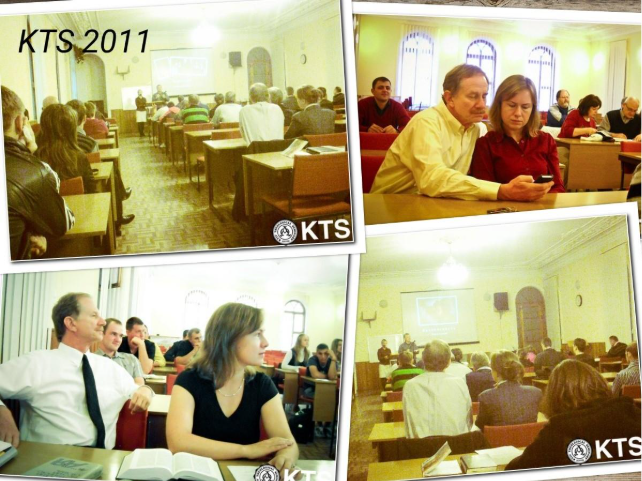
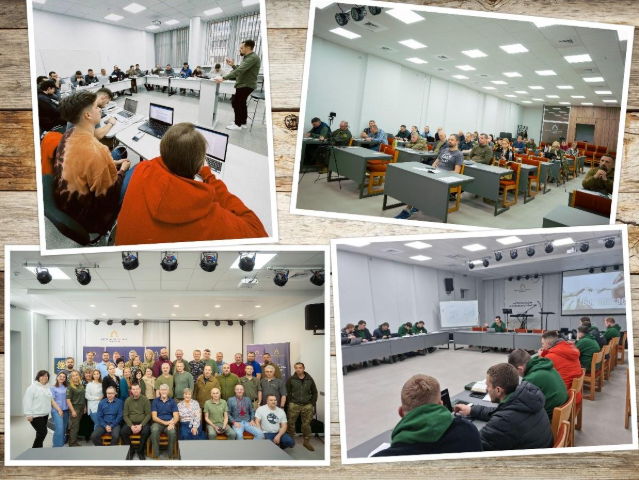
Ukrainian students in both L’viv and Kyiv continue to take classes and prepare for ministry even during regular air raids from Russian missiles. Both schools have adapted for wartime, even conducting classes in underground bomb shelters. Here are two pictures. The first is from 15 years ago in 2011 at KTS. The second is from last year (2025). You can see the improvements overall in the facilities. Many of these upgrades came gradually after 2014. The biggest changes came after the invasion in 2022 when classes began to be conducted in bomb shelters.
Family …
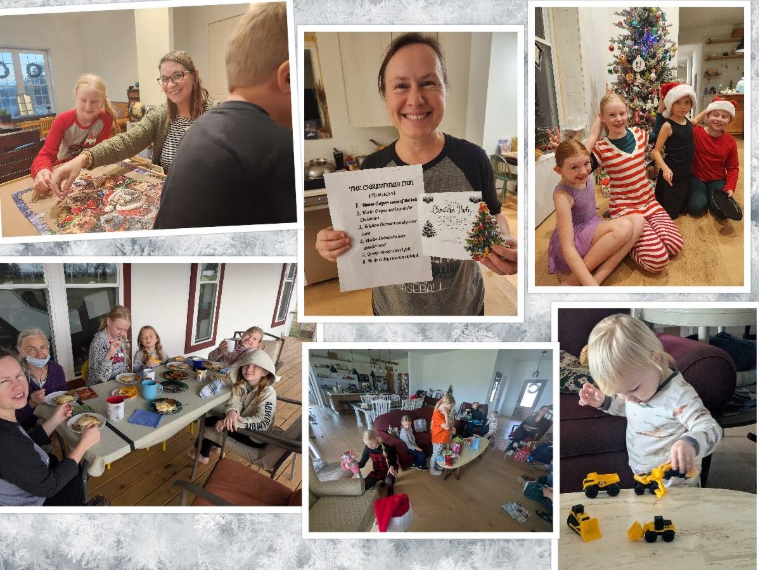
Our family had a wonderful spending Christmas together. Last year, we started a new tradition of getting together on December 23, spending the night together and having our Christmas time together on the morning of December 24th. This gives us a chance to be together and still families are able to go to another family celebration with in-laws. Not everyone could join us this year, but Joy and Ethan and Meredith and her family were all able to be with us. We had a great time just being together, playing games, watching performances by the girls, cooking (and eating), and opening presents. The weather was so warm that we actually had a few meals outside!

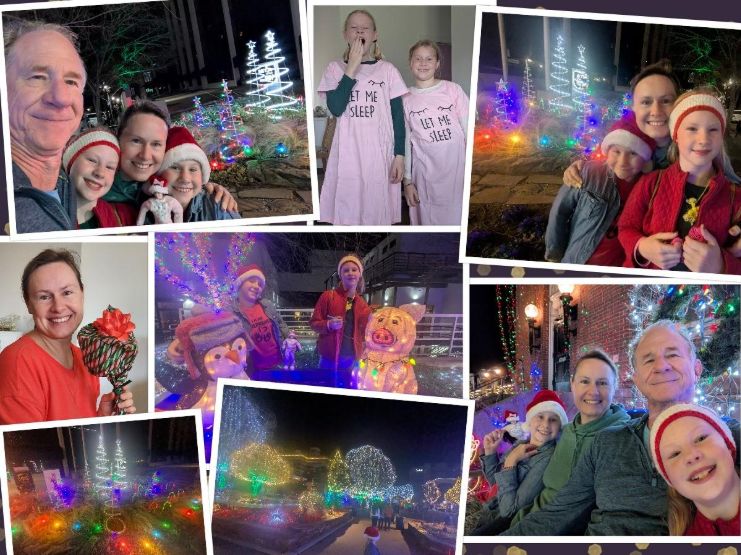
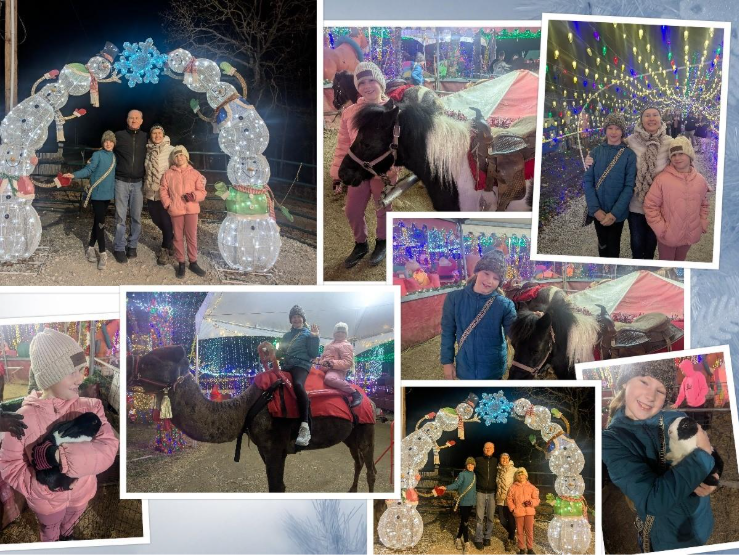
Before Christmas, we enjoyed a couple of different light exhibitions. One even had animals and a camel ride. Interestingly, the guy with the camels was from Moldova so we got to speak with him in Russian.
When we lived in Ukraine, we started a tradition of seeing the Nutcracker ballet each Christmas season. In Ukraine, we watched the national ballet with the national symphony – for only about $25 for the whole family! But we have been blessed to see the Nutcracker done by the Ozark Ballet School each year in Fayetteville (over $25/person!).

We were all sick for New Year’s Eve, but we still sat up to see the ball drop in Time Square. For the last few years, we have been celebrating the New Year on Eastern time when the ball drops in Time Square and then we head off to bed (11:00 pm Central Time!). But our girls finally figured it out. So now we are staying up past midnight 🙁. Still, we had a good time together and look forward to seeing what God will do in our lives in 2026.
Health Issues …
I’m still working through some new health issues. I’m having trouble breathing with even the slightest exertion. I’ve been through multiple cardio tests (including an angiogram = all clear), GI tests, endoscopy and mammography (swallow test). I’m going to be doing pulmonology tests soon. Please pray that we can figure this out.
Pray for Ukraine …
Continue to pray for peace for Ukraine and for our friends and colleagues ministering there. This month, pray especially for warmth. In the spring, summer, and fall, Russia targets residential areas to try to get the Ukrainian people to surrender. Now, in the sub-zero winter, Russia exclusively targets heat and energy plants. Unlike in the US where everyone has their own heating system, Ukrainian cities still use the old city-central heating with a central thermal plant that heats water that is distributed through underground pipes to radiators in buildings. It’s not very efficient, but that’s what they have. When Russian missiles target the thermal plants, it shuts off the heat to whole sections of the city. They have done this every winter with Putin even promising to “freeze” the Ukrainians into surrender. It has not worked but this year they have intensified their attacks on thermal plants. It is very hard for Ukrainians to keep warm with temperatures around –17 F. The cities have set up warm places for residents, but it is still very difficult.
Continue praying for the seminaries where we have worked as they continue to teach and train under very difficult conditions. They are now meeting in bomb shelters for classes. But it is especially hard for the students to get rest since there are air raids every night. Pray too that they can continue to minister and serve the Lord in Ukraine during these difficult times!
By His Grace,
Jim and Katya, Kristina and Nadia
If you missed previous updates or just want to read some short theological reflections, you can find these at our website at https://teachingresources.org/ .
Also, some have asked about how to support us. You can send checks to Teaching Resources International, PO Box 100, Goshen, AR 72735 (note: new address) or pay through PayPal on our website. Just put “#1000 Ehrhard” in the memo so our treasurer knows where to allocate the funds.
Our personal address is 14680 Magnolia Ridge Drive, Fayetteville AR 71701.
 Teaching Resources International