Some people love AI; others fear what it will do to human creativity and ingenuity. AI is becoming so good that it is often hard to tell if what has been produced is human or AI. Basically, AI largely eliminates the need for any human input or decision making.
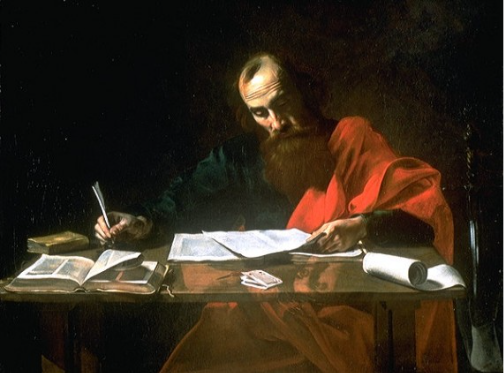
When speaking about Biblical Inspiration, many people wrongly assume that biblical inspiration works a lot like AI. They think it means that God basically took over the human authors and wrote what He wanted without any human elements in their writings. This approach is often called the dictation method or the mechanical dictation theory. It asserts that God transmitted Scripture word-for-word to passive human writers, who acted merely as mechanical scribes, secretaries, or typewriters recording a divine message. This approach suggests that human writers contributed no personal style, emotion, or vocabulary; they functioned like stenographers or amanuenses (dictation scribes). Many think this is the evangelical approach to inspiration – but it is not. Even the early Reformers (like Luther and Calvin) rejected such ideas, though later Protestant scholastic scholars advocated it.
But the Bible itself testifies against such an approach to inspiration. The books of the Bible display clear personal vocabularies, grammar, and literary styles unique to individual authors (for example, the distinct Greek style of Luke versus Paul or Matthew). Also, writers like Luke explicitly mention gathering eyewitness accounts and doing their historical research (Luke 1:1–4) rather than simply taking passive dictation. For example, As J.I. Packer writes “that in inspiration God did not obliterate the personality, style, outlook, and cultural conditioning of his penmen…”. Likewise, Benjamin Warfield argues against proponents of dictation in illustrating the unlikely process of God dictating letters to Paul: “violently forcing the material He wished expressed through him”. Warfield concludes “nothing of the sort took place.”
Times of war and crises require all kinds of heroes. But probably one of the most important heroes is not one that we usually think of. We quickly think about the outnumbered soldiers capturing a company of enemy soldiers by themselves. Or we remember the medic who crawls across enemy lines to rescue injured soldiers. But perhaps the most important hero in war often never directly sees combat. This is the leader who inspires the soldiers to fight and motivates the people to hang on in spite of relentless enemy attacks.
Winston Churchill did this in the Second World War. Against all odds and relentless attacks by Germany, Churchill’s speeches were encouraged both the population and the army to keep on fighting no matter how dim the situation seemed. Some might say that Volodymyr Zelenskyy has done the same for Ukraine over the last 4+ years. When Russia invaded and surrounded Kyiv in early 2022, President Biden offered to evacuate Zelensky from Kyiv. Zelensky replied, “I need ammunition, not a ride.” With that and many other selfless words, Zelensky has inspired the Ukrainian people to fight on against a larger and superior power.
But that’s not what the Bible means by inspiration. The dictionary definitions for inspiration are a lot like Churchill and Zelensky’s inspiring their nations. So, the most common meaning for inspiration is to be motivated by someone or something. Another definition for inspiration is to get a sudden creative idea. It’s a lot like the cartoons where someone is thinking about something and, all of the sudden, a light bulb comes on in their mind. They got an inspiration – a sudden creative idea.
However, the biblical or theological definition is totally different. The biblical idea of inspiration comes primarily from 2 Timothy 3:16 where Paul says that all scripture is inspired by God. And the word he uses for “inspired” is a unique word – Theopneustos – that literally means God-breathed. So, the biblical idea of inspiration is very different from the dictionary definition. It is not simply an inspiration that a person gets, but rather it is God breathing His words into the authors of scripture. So, we would define inspiration as the process of recording God’s revelation in writing. Let’s look at a number of aspects about this definition so that we can better understand what inspiration means in biblical and theological sense.
Six months after Pearl Harbor, the Japanese Navy planned a massive surprise assault to capture Midway Atoll, intending to destroy the remaining U.S. Pacific Fleet and effectively destroy the US efforts to defeat the Japanese. Early in the war, US code breakers were able to decrypt the secret Japanese naval codes, JN-25. In the spring of 1942, intercepted messages showed Japan planning a massive assault on June 4th on a target labeled only as “AF.” The intercept contained exact timelines and other crucial information. It lacked only the most important piece of information: where was the target “AF?” Since some thought it might be Midway Island, the code breakers sent a fake message falsely claiming that their water distillation plant at Midway had broken down. Soon after, they intercepted another Japanese message reading: “AF is short on fresh water.”
Now the general information about a massive attack was no longer “general” — it was specific. They knew AF was Midway Island,and that Japan was sending most of their aircraft carriers and a massive naval fleet to Midway. Because American code breakers had deciphered the Japanese codes, they knew the exact time, date, and location for the upcoming attack. It was no longer general information – it was specific!
The Americans set a trap for the Japanese fleet. Land-based planes from Midway and carrier-based planes from the U.S. fleet surprised and attacked Japan’s fleet. All four Japanese fleet carriers present at the battle—Akagi, Kaga, Sōryū, and Hiryū were sunk, as well as the heavy cruiser Mikuma. Japan also lost 3,000 men, including many well-trained pilots. Japan’s defeat and loss of its carriers dramatically shifted the balance of power to the American naval forces for the remainder of the war. As long as their information about Japanese intentions remained “general,” the Americans were unable to know when and where the Japanese fleet would be. But once the information became “specific,” the American navy now had the advantage.
Last October, we examined some aspects of God’s special revelation to us and compared it with general revelation. General Revelation is able to tell us some things about God and His creation, but it is insufficient to give us any specific information about God’s nature or His plan for salvation. That’s why Special Revelation is so essential for us!
The Bible is Special Revelation for us. Scripture is the special revelation of God that has been written down and preserved for all generations. Because of this, we are not left to guess what God desires or what God is like. Scripture is specific. Like the American forces at Midway Island, we know exactly what God wants from our lives and exactly how to be saved. Without special revelation, we are left to our own best guesses about God and His desires. But with Scripture, we can know exactly!
So, what are some truths that we can note about God’s Special Revelation?
First of all, Special revelation is direct. Special revelation is distinguished from general revelation in that it is direct revelation from God. This is where God directly speaks to or through someone. Examples would include God’s direct speech to prophets (2 Peter 1:20-21), Jesus Christ (Hebrews 1:1-2) and the Bible (2 Timothy 3:16; Hebrews 4:12). God would directly appear or speak to an individual like Moses, Isaiah, or the apostle Paul. God would usually give the person a message or task to deliver or accomplish.
Second, Special revelation is specific.As God moved people to speak or write for Him, the Holy Spirit would guide them to specifically say exactly what the Heavenly Father wanted to be said as Peter says in 2 Peter 1:21: “For no prophecy was ever produced by the will of man, but men spoke from God as they were carried along by the Holy Spirit.” For example, when speaking to eternal life in John 3:16, John was guided to write, “For God loved the world so much that he gave his one and only Son, so that everyone who believes in him will not perish but have eternal life” – very specific!
There is another way Special revelation is specific. For example, we know from HISTORY that Jesus died on a cross. Anyone can see that. But special revelation explains to us the significance of his death when it explains that He died to pay for our sins. No amount of historical research or investigation can tell us this. Historical events are not divine revelation. We need special revelation to tell us that Jesus died for us. So Special revelation is specific. It gives specific details that general revelation cannot.
Third, Special revelation is Trustworthy.You can trust the Bible. When God revealed Himself and His truth through the Bible, He made sure it was truthful and accurate. You can have confidence in it. God’s special revelation, the Bible, will always tell the truth because God cannot lie and He would not allow His Word to tell lies. Titus 1:2 tells us that God “does not lie.” Because God is a God who does not lie, His words can always be trusted. Since all of Scripture is spoken by God, there can be no untruthfulness in Scripture. Hebrews 6:18 tells us that “it is impossible for God to lie.”.
Fourth, Special revelation is authoritative.All the words of Scripture are God’s words – to disbelieve or disobey any word of Scripture is to disbelieve or disobey God. Therefore, God’s special revelation – regarding His Scriptures – have authority over our lives. Being God’s Word, the Scriptures inherently possess the right to command and to enforce obedience to their revelation of God’s will for mankind, both for unsaved and saved people.
Fifth, Special revelation is progressive.Hebrews 1:1 tells us that God revealed himself at “many times and in many ways” in the past. Adam received a bit of God’s truth, and so did Noah; God spoke more fully to Abraham, unveiling more of Himself and his purposes. He revealed Himself supremely in the Old Testament through Moses. Progressive revelation is a movement from truth to more truth and so on to full truth. But we need to be sure we understand the idea of Progressive Revelation. It is not a movement from error to truth but from truth to truth. For this reason, some call this cumulative revelation.
Progressive revelation means God did not reveal all truth about Himself at one time but revealed Himself gradually, little by little to different people throughout history. Hebrews 1:1 expresses this, “Long ago God spoke many times and in many ways to our ancestors though the prophets. And now in these final days, he has spoken to us through his Son” (vs. 1-2). Good theology traces the progress of this revelation, noting the revelation concerning Himself that God has given in each particular era or through each particular writer. Therefore, God’s self-disclosure was not as advanced to Noah and Abraham as it was to Isaiah. And the apostle Paul had more revelation and understanding than Isaiah due to the progressive nature of special revelation.
Sixth, Special revelation is useful.God’s Word was never intended to be studied for academic knowledge only. It is a practical book given to you for application to your life. In 2 Timothy 3:16, Paul makes this clear when he wrote, “All Scripture is given by inspiration of God, and is profitable for doctrine, for reproof, for correction, for instruction in righteousness, that the man of God may be complete, thoroughly equipped for every good work.” This is a key verse regarding the doctrine of Scripture. It introduces the inspiration of Scripture (“All Scripture is inspired”), the authority of Scripture (“by God”) and the usefulness of Scripture.
To get the most out of God’s Word it would need to be specific and very practical. Even though it is a heavenly book, it is also a down-to-earth book. It meets us where we are and gives divine instruction about our daily lives. God’s Word is designed to reveal God to you, but also to help us deal with the realities of your everyday life. Notice Paul says that God’s Word “is useful.” The word “useful” (ophelimos in Greek) carries the idea of being beneficial, productive, and sufficient. It is profitable and useful to teach you the truth you need to know and to train you how to live out that truth. It is designed to point you to Christ and to help you connect your life with Christ. This is what having solid doctrine does for you. It is useful and practical in your life. And this is one of the benefits of Special revelation from God’s Word. But it is only helpful if it is specific.
The Battle of Midway would probably have been a massive defeat for the United States if all our military planners had was “general” information. But, because they intercepted and decoded Japan’s plans to attack Midway Island, they were able to turn almost certain defeat into an amazing victory that turned the tide of the war in the Pacific. God’s Word is even more important for us. Without this specific instruction from God, victory for believers would be fleeting. Praise God for giving us His specific, special revelation for our lives!
Serving and Teaching …
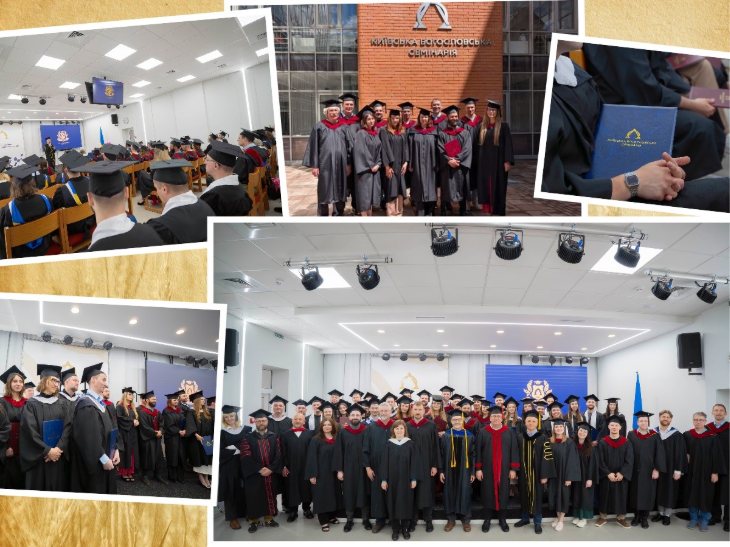
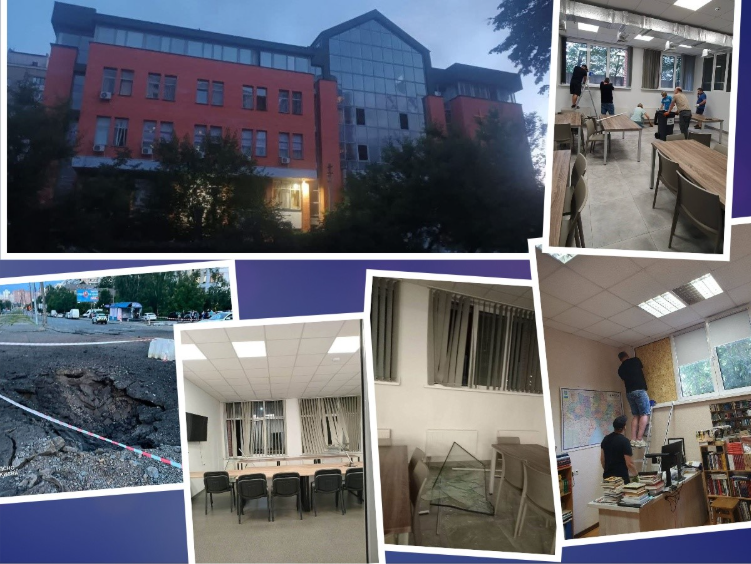
Both seminaries continue to have graduations in June. They have graduations by specializations because of the war. Instead of being able to have graduations in a large auditorium, they are having to have smaller graduations. Also, this past week, a Russian missile landed less than a block away from Kyiv Theological Seminary. Many windows were blown out, but no one was hurt. Please keep praying for Kyiv Theological Seminary and Ukrainian Baptist Seminary (in L’viv) as they continue train men and women for ministry.
This month, I will be talking with churches at GlobalServe International new missionary orientation about providing theological education for their missionaries. This is a very needed ministry for these missionaries as they will be planting churches among unreached people groups. Based on discussions, it looks like we will have to wait until next year to start our first group. This year, we will be working on contacting and enrolling students for next fall. We wish we could get a group started sooner, but churches and candidates need more time to evaluate what they want for their missionaries. So, we should have some clear direction after our Sender’s Forum Conference in February 2027. Be praying as their churches consider options for theological education and as we work on setting up plans for next year’s group. Also, they have asked me to consider helping with missionary care while we are working on setting up theological training. Pray for us as we determine how we can be most helpful for the missionaries at GSI.
Finally, I want to share a very special moment from the conference at GSI this year. I can’t share many details because all GSI missionaries are working in closed access countries and security is very important. Each year at Orientation, we spend time praying for specific GSI missionaries and their needs at every break. Last year, while we were praying, we received an urgent request as one of our missionaries was arrested for being a missionary in a closed country. They were released but expelled from that country. This year we were updated to learn that they had been relocated to another country to continue their work. That was special.
But something even more special happened on Wednesday morning this year. On Monday, we prayed for a missionary family that is having their final Bible translations for an unreached people group in SE Asia checked. On Wednesday morning, GSI received an email from that missionary. When this missionary was doing a language check on the passage about the crucifixion with his native speaker who was not a believer, he asked, “Do you understand what happened at the crucifixion?” He was only checking the language translation, but the native speaker said, “I understand that Jesus died for me and that I need His blood applied to the doorposts of my heart.” Then he asked, “What do I need to do to become a follower of Jesus?” The one who received the email couldn’t read it and the MC had trouble too. It was too emotional. This is what missions is all about. The unreached people group that we had prayed for on Monday had its first believer on Wednesday! This is why GSI missionaries spend years learning the language, translating the scriptures and then teaching through the Bible. So that people from every nation, tongue and tribe can praise God in their own language. And this happened surprisingly – before the translations were even finished.
Family …
Most of my time this past month has been spent working on our rental house in Cabot. Our tenant moved out unexpectedly and we had a massive about of repairs, cleaning and updating to do. I’ve spent at least 3 days a week in Cabot for the last 3 weeks working on the house. We removed and replaced all the floors, repainted all the walls, and did a lot of carpentry repair work. We also had a lot of work outside too. It has been exhausting but the house should be ready to rent by the first of August. Pray we can get a good renter who will stay and take good care of our house.
Our really big family event this month was Nadia’s 11th birthday! Kristina and Nadia have really gotten into the Lord of the Rings Trilogy, so Nadia wanted a Fellowship of the Rings theme. She had a really great party with the Coopers and enjoyed her favorite sloppy Joes birthday meal!
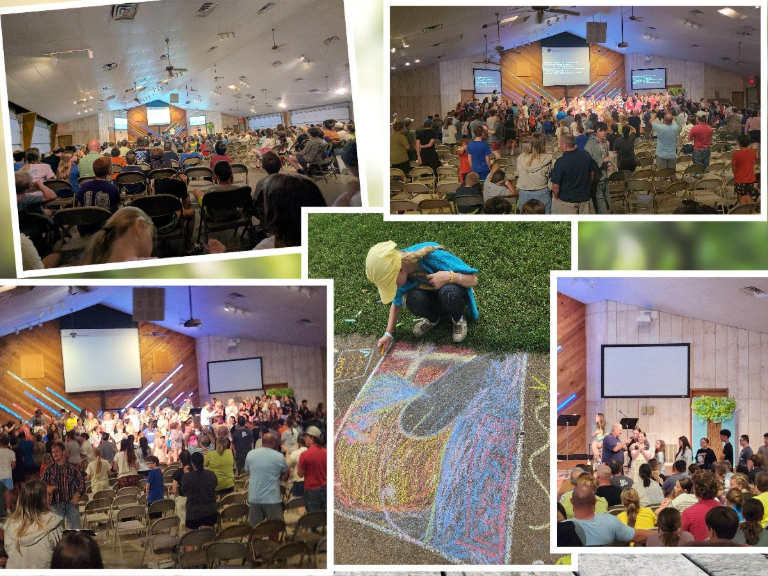
In June, we went to a family camp with the little Baptist church just down the road from us. We knew many of the people from the church and they invited us to join them at their annual camp. We had a great time. The pastor of the church, Stuart Estes, was the main speaker and he lead us through some excellent teaching on the Book of Esther. The girls were able to participate in various sports and activities during the week. Kristina even won a prize for the most creative chalk art drawing. Both girls made decisions to follow Christ at the camp! It was a great time for our whole family.
Also, this year, both girls are old enough to help with the VBS at our church. The church needed help decorating for the VBS, and Nadia and Kristina spent an afternoon helping with decorations. They are both excited about being helpers this year at Camp Harvest.
It has been a busy month, and we are looking forward to a family reunion in the Smokies next month.
Retirement???
I continue to struggle with questions about retirement. I want to have a break, but I also want to keep teaching and doing ministry. I won’t know completely about GSI’s needs for theological education until their February meeting. I was able to share with a few churches at the orientation and now I will need to see how many missionaries want to be involved in some theological training. I’ll be talking with churches and missionaries about this in the coming months. I do think I need to keep working toward retirement, but the timing will depend a lot on how much I’m needed at GSI. I have also had some friends ask me about trying to put some theological and historical lectures on YouTube. We already have a number of lectures in Ukrainian and Russian on YouTube, but none in English. I’ll be working on trying to start posting some of these too. This will take a lot of time, but, once the lectures are posted, they will continue to be a benefit to believers for many years ahead. Pray with me as I try to figure out if we can get this done.
Pray for Ukraine …
Russia is increasing its attacks on civilian targets in Ukraine and especially in Kyiv in response to Ukraine attacking their oil refineries. Even one missile landed less than a block away for the seminary and did a fair amount of damage to the campus (see above). Please continue to pray for protection for the seminary and our students during this war.
Even with the continuing war, our students are continuing their ministries. Pray for them and for the people they are ministering to. The war has provided many more opportunities for sharing the gospel as well as meeting people’s needs.
Thank you for your prayers and support for us. We are getting close to finishing our house (mostly just details and finish work now) thanks to a large gift we received last month. Now, I just need the time to get the work done. We are so grateful for the Word of God. It has sustained us and encouraged us in so many ways. And we are thankful for you as your support and prayers have sustained us as well during one of the most difficult times of our lives.
By His Grace,
Jim and Katya, Kristina and Nadia
If you missed previous updates or just want to read some short theological reflections, you can find these at our website at https://teachingresources.org/ .
Also, some have asked about how to supportus. You can send checks to Teaching Resources International, PO Box 100, Goshen, AR 72735 (note: new address) or pay through PayPal on our website. Just put “#1000 Ehrhard” in the memo so our treasurer knows where to allocate the funds.
Our personal address is 14680 Magnolia Ridge Drive, Fayetteville AR 71701.
Wouldn’t it be great to know what was going to happen before it happened? We could take another route before a major accident was going to happen. We could evacuate before a hurricane or tornado struck our home. Or we could avoid bad and costly decisions by knowing what was going to happen in the future. We could know what was ahead, and we could prepare for whatever was going to happen.
That’s what makes the providence of God one of the most comforting doctrines for believers! He sees ahead and makes provision for His children. The word “providence” is a compound word in Latin – “pro” meaning before, and “video” meaning to see ahead of before. Providence means that God sees ahead or sees before anything happens. This should be a great comfort to believers. We do not see the future, but God does! He not only knows and sees everything that will happen before it happens, but He also makes provision for His children in every circumstance. What a comfort “providence” is to the child of God.
Goodness and greatness rarely go together. Often when a person becomes great, they cease to be good. Their desire for power and recognition often eclipse their desire for good. Many great rulers often started with a desire to do good for their countries and their people. But, when greatness comes, they seek even more greatness and more power. This is why Lord Acton famously said, “Power tends to corrupt, and absolute power corrupts absolutely.” Only God is totally great and totally good.
But it is important to know that a person’s view of God affects the way they live their lives. Some people view God as a “cosmic grandfather” who lovingly overlooks sin that we commit. Others see God as a “cosmic kill-joy” who is always looking down from heaven, seeing us enjoying anything in life and shouting at us to stop it!