Good Theology … (February 2026 Update)
Mention theology or doctrine among Christians and you are likely to get a variety of responses – mostly negative. But theology is simply “the study of God.” In that sense, everyone is a theologian, even the atheist! The question is not whether we have a theology, but whether our theology is good or bad, and whether our theology is biblical or not!
In Mere Christianity, C. S. Lewis says, “[If] you do not listen to Theology, that will not mean that you have no ideas about God. It will mean that you have a lot of wrong ones— bad, muddled, out-of-date ideas.” That’s why the study of theology is so important.

We all have ideas about God (or about the non-existence of God) and about what He desires. Theology is simply “knowing about God.” The crucial question is, “What can we know about God?” “How can we know what God desires?” Evangelical Christians begin with the Bible. The Bible is our beginning point because we cannot begin to know God without His self-revelation in Scripture. But it is also our ending point because we view the Bible as the final word on any theological discussion.
So technically, theology involves the study of God. Literally the word theology means “the knowledge of God.” There are many ways we can find out about God, but, in Christian theology, we study what has been revealed about God. This is because we cannot understand anything about God unless He reveals Himself to us. This is why the Bible is our source for all our theology. If we have a theology rooted and grounded in the Bible, then we have “good theology.” If our theology is based on anything besides the Word of God, then it is not good theology.
Most of the time, when someone mentions theology, they are speaking about Systematic Theology. Systematic theology is any study that answers the question: what does the whole Bible teach about any particular topic?” In other words, if someone asked the question: what does the Bible teach about prayer? The answer to that question would be found in systematic theology. Systematic theology surveys the entire Bible to find out what the Bible says as a whole about any particular topic. So, if you want to know what the Bible says about baptism, we would not just study one passage, but rather we would examine many passages throughout the Bible to see what the Bible says as a whole about that topic. And that’s why we call it systematic theology.
Now there are other theological disciplines, including Historical Theology, Biblical Theology, Contemporary Theology and Dogmatic Theology. But Systematic Theology is the primary focus of most theologians and most pastors. However, when we study systematic theology, it is very important that we understand the relationship between scripture and theology.
First, we need to remember that theology is not scripture. We must be careful not to allow our theology to influence our understanding of scripture. Theology is not scripture. But our theology should be based only on scripture. You must be careful not to put the “cart before the horse.” Scripture drives our theology, not the reverse!
Second, scripture is what gives us our doctrine. So, we could say that scripture generates or creates doctrine. Third, doctrine helps us to interpret scripture. Doctrine gives us a warning whenever our understanding of scripture passage does not seem to fit with interpretation. But we must always be careful to make sure that scripture comes first, and that all of our doctrine is based only upon scripture.
Finally, let’s look at the value of good theology …
First, good theology demonstrates the unity of Scripture. In 2 Peter 1:21, Peter reminds us that no scripture is of personal interpretation. Peter says, “Above all, you must understand that no prophecy of Scripture came about by the prophet’s own interpretation. For prophecy never had its origin in the will of man, but men spoke from God as they were carried along by the Holy Spirit.” Systematic theology shows that all of scripture is united by showing how all scripture teaches the same thing.
Second, good theology demonstrates the relevance of Scripture. 2 Timothy 3:10, 14-17 tells us that scripture equips and prepares us for ministry and for life: “But as for you, continue in what you have learned and have become convinced of, because you know those from whom you learned it, and how from infancy you have known the holy Scriptures, which are able to make you wise for salvation through faith in Christ Jesus. All Scripture is God-breathed and is useful for teaching, rebuking, correcting and training in righteousness, so that the man of God may be thoroughly equipped for every good work.” Theology shows how the truth of scripture is practical and relevant today.
Finally, good theology demonstrates the clarity of Scripture. Psalm 119:130 says, “The unfolding of your words gives light; it gives understanding to the simple.” Theology helps to make clear areas of Scripture that need explanation. By examining passages systematically through the entire Bible, we are able to gain insight into some passages that are hard to understand. It fits the saying, “Scripture explains scripture.” When we examine other passages, we understand difficult passages – that is systematic theology.
How to become a good theologian:
First, the best way to become a good theologian is to stay focused on Scripture. John Calvin viewed his Institutes only as help for aspiring disciples “to find the sum of what God meant to teach us in his Word.” The goal of his systematic theology is to focus people on God’s Word, not to become a substitute for reading God’s Word! You cannot be a good theologian by simply reading good theologies – you must stay focused on God’s Word. If you focus only on theological books, you will believe what men are saying about God, not what the Bible says about God. Stay focused on Scripture. Test everything by Scripture rather than accepting what the scholars say.
Second, to become a good theologian, make prayer your priority. Martin Luther instructed his students: “You should completely despair of your own sense and reason, for by these you will not attain the goal…. Rather kneel down in your private little room and with sincere humility and earnestness pray God through his dear Son, graciously to grant you his Holy Spirit to enlighten and guide you and give you understanding.” Before we study, while we study, and after we study, we ought to be praying constantly, “Open my eyes that I might see the wonders that are in your law” (Psalm 119:18).
Third, to be a good theologian, learn to meditate. Luther also commends meditation to aspiring theologians. He says, “This means that not only in your heart but also externally you should constantly handle and compare, read and reread the Word as preached and the very words as written in Scripture, diligently noting and meditating on what the Holy Spirit means.” Meditation has been given a negative connotation by its connection with Eastern philosophies. But Eastern meditation is very different from Biblical meditation. Eastern meditation encourages one to empty the mind so that one can become one with the universe. Biblical meditation encourages one to fill the mind with God’s Word so that we will not be led astray by our own understandings.
The word “meditate” simply means to chew something over and over. This is what a cow does when it eats grass and repeatedly brings it up to be rechewed again and again. This process is called “rumination.” That word also means to think repeatedly about something. The best theology comes as we spend time reading and meditating on God’s Word over and over again. In our fast-food society, “would-be theologians” often skip this essential step, and that prevents them from having a good theology.
Fourth, to become a good theologian, read good theology. Notice that this is last! Good theologies help to correct us and instruct us. But we should not start with them. Many problems arise if we begin by reading theology books. Read theology to test your own theological ideas and interpretations. And read as widely as you can. Every theologian has his weaknesses and strengths. No one theologian or theology is totally true or trustworthy. So read widely and think deeply about all that you are reading. And, most of all, test everything by the Scriptures. Men are fallible; God’s Word is not!
So don’t think negatively about “theology.” Theology is simply the knowledge of God – something every one of us needs more and more. “Do your best to present yourself to God as one approved, a worker who does not need to be ashamed and who correctly handles the word of truth” (2 Timothy 2:15, NIV).
Opportunities to Serve and Teach …
Theology is very important for pastors and for church planters. It is especially important for missionaries who are committed to establishing Biblical churches among indigenous groups where the gospel has not yet been preached. There are many things that are essential for missionaries trying to reach unreached people groups. Language acquisition is absolutely indispensable. But so is having a proper theological foundation. If missionaries do not have a solid theological foundation, they will be establishing weak churches that will be very susceptible to serious doctrinal error and confusion.
That is why our main focus this year is developing a theological training track for GlobalServe International missionaries. Right now, it seems to be best to use programs that are already available and develop more of a mentorship/internship approach to train missionaries using already established programs. We are looking at using Union School of Theology (based in England) as our basis for those that want an accredited program. This program costs about ¼ the cost of a traditional seminary education. I would still be responsible for leading our missionaries through this program. We will be discussing this at the GSI Sender’s Forum this February (next week) at our annual meeting. Be praying as we try to find the best way to prepare missionaries for planting churches among unreached people groups.
So far, I have been able to train and mentor Ukrainian professors (all former students) to teach almost all of my classes in Ukraine. I will still be teaching a couple of classes this Spring. In April, I’ll be teaching the second half of Church History at Lightbearers (here in Fayetteville), and I will possibly be helping with the Prayer and Worship class in May. I still have the Evangelism class at Kyiv Theological Seminary in October, but I am trying to get a Ukrainian to teach that class. Pray for me as I teach these classes or assist and train new teachers.
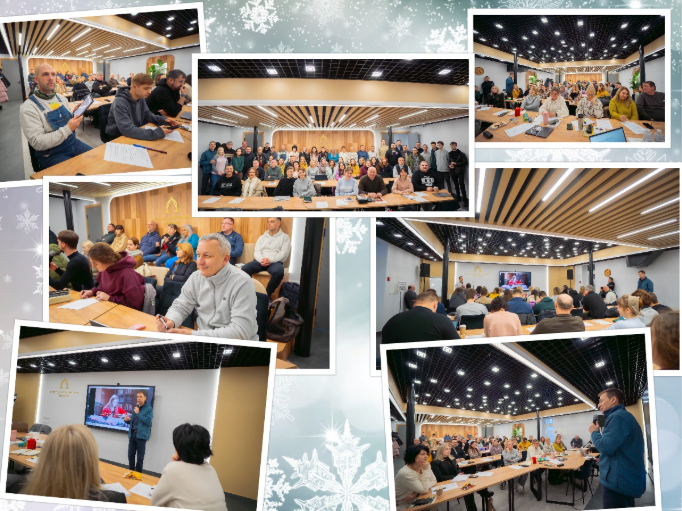
The students at Kyiv Theological Seminary (KTS) and at Ukrainian Baptist Seminary (L’viv) continue their studies even while the war goes on. Both schools have added classrooms in bomb shelters so they can have classes even when they are under missile attack. The biggest challenge now is the extreme cold and managing with very little heat. KTS even hosted a special seminar on Biblical Counseling last month.
Family …
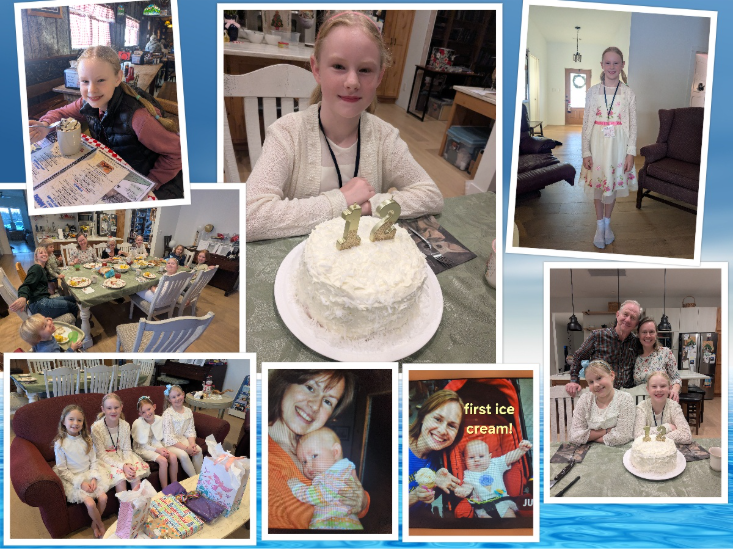
Our big event this month was celebrating Kristina’s birthday. She turned 12 years old this year! She is growing into a wonderful young lady, and we are excited to see how she is growing. She had multiple birthday events, including breakfast at “Granny’s Kitchen”, lunch and presents with our family and with the Coopers. Katya even found a couple of pictures from Kristina’s first year!
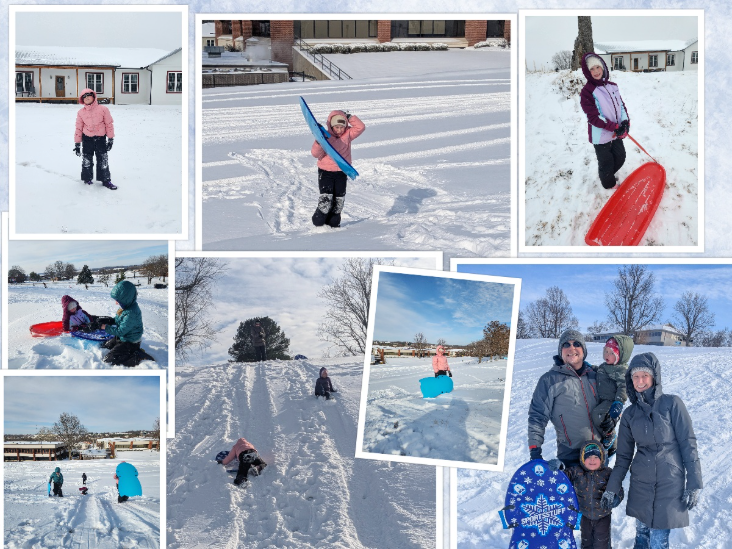
Another special event was the 3 days of snowfall that we received in January. Snow is always rare here and when it snows, we stop everything, pull out the sleds, and go sled riding. Even though it was extremely cold (about 1 F), we enjoyed every minute of it! We were also joined by the Coopers and got to see Sully and Cass enjoy their first sled riding too!
Health Issues …
I still have no answers and I’m waiting for the next round of tests (pulmonology) when I return from the GSI Conference next week. I’m having trouble breathing with even the slightest exertion. Please pray that we can figure this out.
Pray for Ukraine …
Continue to pray for peace for Ukraine and for our friends and colleagues ministering there. Continue to pray that Ukrainians can find warmth and survive this winter. Every night, Russia continues to target Ukraine’s heating and electric infrastructure. Here’s a recent update from Kyiv Theological Seminary: Kyiv has been “struck by a massive wave of Russian missile attacks using a large number of missiles of different types. As a result, heat generation facilities and boiler plants on the left bank of the city, where Kyiv Theological Seminary is located, were seriously damaged or completely destroyed. Electricity supply is extremely unstable and in many areas there is almost no power at all. Water supply is also disrupted. This situation has been ongoing throughout December and January during one of the coldest periods of the year, with temperatures falling to minus twenty degrees Celsius. When heating stops under such conditions, buildings cool down very quickly. Firefighters are struggling to extinguish fires at the sites of explosions because water freezes. Kyiv is now on the brink of a humanitarian catastrophe.
“The team of Kyiv Theological Seminary is making every effort to preserve the campus, continue the educational process, and provide assistance first of all to faculty members, staff, believers, and all those in need. The scale of need is enormous and it continues to grow every day. Even in these trials, we are committed to remaining faithful to God, to serving others, and to demonstrating the Gospel through our actions in these extremely difficult circumstances.”
Please continue to pray for a real and lasting peace in Ukraine. And pray that the gospel will continue to go forth and that new churches will be established even in these difficult times.
By His Grace,
Jim and Katya, Kristina and Nadia
If you missed previous updates or just want to read some short theological reflections, you can find these at our website at https://teachingresources.org/ .
Also, some have asked about how to support us. You can send checks to Teaching Resources International, PO Box 100, Goshen, AR 72735 (note: new address) or pay through PayPal on our website. Just put “#1000 Ehrhard” in the memo so our treasurer knows where to allocate the funds.
Our personal address is 14680 Magnolia Ridge Drive, Fayetteville AR 71701.
 Teaching Resources International