The Power of the Gospel … (March 2026 Update)
In 1844, the world was dramatically changed by one message. On May 24, 1844, Samuel Morris sent a message from Washington DC to his partner in Baltimore, Maryland (a distance of just 40 miles). The message, “What hath God wrought [accomplished],” expressed the arrival of an almost miraculous new technology.
Before the development of the telegraph, information in the 19th century was transmitted across long distances by drumbeats, signal fires, smoke signals, or flags to exchange information between far-flung points. By the early 19th century, it was common knowledge that information could only travel as fast as the fastest horse (or horses, in the case of the Pony Express). The Pony Express made it possible to send a letter from St. Joseph Missouri to Sacramento, California in just 10 days! For example, the greatest American victory in the War of 1812 took place 2 weeks after the end of the war and the signing of the peace treaty. Why? Because information travelled so slowly, neither the British troops nor the American forces knew that the war had ended. With the invention of the telegraph, messages that previously took weeks were delivered in minutes, establishing the first “real-time” information network. This invention truly turned the world upside down in those days!
But long before the invention of the telegraph, another revolutionary idea swept across the Roman Empire in the 1st century. In Acts 17:6, the people of Thessalonica were confronted by the spread of the gospel and sought to stop it. They cried, “These men who have turned the world upside down have come here also….”

That’s quite interesting, isn’t it? A couple of insignificant preachers came to this major city of Thessalonica in the Roman Empire, and they were accused of upsetting the entire world! And it wasn’t just Paul and Silas – this same gospel that they were preaching was being rapidly spread across the Roman Empire by believers at an astonishing rate. And the message they were proclaiming was changing people everywhere. They were truly “turning the world upside down!”
How did they do this? It wasn’t because these men had fancy training. It wasn’t because they had been to seminaries or schools. It wasn’t because they had great financial backing behind them. It wasn’t because they had certain kinds of methods or large numbers to go out and share the gospel. It was only because of one thing. It was because they kept their emphasis on where the emphasis belonged. They kept their emphasis on the power of the word of God to change people’s hearts. They kept their emphasis upon the gospel. In Romans, the first chapter, when Paul is writing to the Christians in Rome, he wants them to know something that’s foundational to his life and ministry. He says, “For I am not ashamed of the gospel of Jesus Christ, for it is the power of God unto salvation to everyone who believes, to the Jew first and also to the Gentile.” And Paul says the same thing in 1 Corinthians 2:2: “For I resolved to know nothing while I was with you except Jesus Christ and him crucified.” Why? Because the gospel alone has the power to change people’s lives. The gospel alone has the power to “turn the world upside down.”
What must we do to “turn the world upside down” today?
First of all, our Approach must be Patient. In verses, 1-4, we can see that Paul’s approach to sharing the gospel was not just sharing a quick gospel presentation. Real biblical evangelism requires being patient. It doesn’t mean that you can’t share a brief word or share a tract, but most evangelism requires taking time to explain the gospel. Biblical evangelism takes time. It requires a willingness to sit down and talk with people about things.
And that’s what Paul did here in Thessalonica. Notice, first of all, that he spends three sabbaths with them. It’s clear that he would have spent more time, but, as we will see later, opposition cut his visit short. Still, it was always his goal to spend as much time as possible explaining and teaching the gospel.
There are three words that Paul uses here that explain what he did in evangelism. First of all, he was reasoning. Secondly, he was explaining. And third, he was demonstrating.
First of all, he’s reasoning with them from the Scriptures. The word reasoning literally is the word “dialogue.” In other words, he was having question and answer sessions. He would present to them what the Word of God said, and he would ask them questions, and they would ask him questions.
A number of years ago, I read an interesting book called, Questioning Evangelism by Randy Newman. When I first saw the title, I thought, “What is the author doing? Is he questioning whether we should do evangelism?” That’s not what he was doing. In fact, he was pointing out that, when Jesus did evangelism, most of the time, he asked questions. For example, when the rich young ruler comes to him and says, “Good master, what must I do that I might inherit eternal life?” Jesus doesn’t present the gospel. Instead, he asks him a question, “Why do you call me good?” He wants the young man to think about WHO it is that he is talking to. Asking questions is an important way to open up dialogue about the gospel.
So, Paul spent time asking questions and answering questions in Thessalonica. He was not just preaching the gospel; he was reasoning with the people of Thessalonica.
Second, good evangelism involves explaining the gospel. In Thessalonica, Paul took time to give explanations about the gospel. In Acts 8, when Philip encounters the Ethiopian eunuch on the desert road to Gaza, he sees that he is reading from the prophet Isaiah, chapter 53. So, Philip asks, “Do you understand what you are reading?” The eunuch replies, “How can I, unless someone explains it to me?” And Philip climbed up into his chariot and explained about Jesus being the Messiah and about how the Messiah suffered, died and rose again. After his explanation, the eunuch said, ‘Look, here is water. What can stand in the way of my being baptised? Philip said, ‘If you believe with all your heart, you may.’ The eunuch answered, ‘I believe that Jesus Christ is the Son of God.’ So, Philip baptized him.
That’s explaining the gospel. Often people read the Bible or read some books that we share with them and they have questions. Evangelism includes answering questions and explaining what the gospel means. That’s what Paul did consistently in his ministry. The reasoned with people and he explained the gospel so they understood it clearly before making a decision.
Third, evangelism includes demonstrating the gospel. It is essential that we share the gospel. It is important that we reason with people and we explain the gospel. But it is equally important that we demonstrate the gospel. Paul did this in Thessalonica consistently. In 1 Thessalonians 2:1-7, Paul reminds the people of Thessalonica about the character of his ministry there. He did not just preach the gospel: he lived it openly and consistently:
You know, brothers and sisters, that our visit to you was not without results. We had previously suffered and been treated outrageously in Philippi, as you know, but with the help of our God we dared to tell you his gospel in the face of strong opposition. For the appeal we make does not spring from error or impure motives, nor are we trying to trick you. On the contrary, we speak as those approved by God to be entrusted with the gospel. We are not trying to please people but God, who tests our hearts. You know we never used flattery, nor did we put on a mask to cover up greed – God is our witness. We were not looking for praise from people, not from you or anyone else, even though as apostles of Christ we could have asserted our authority. Instead, we were like young children among you.
And the gospel was also demonstrated by the power way it converted the people of Thessalonica. In 1 Thessalonians 1:4-10, Paul reminds that about the powerful demonstration of the gospel as people there “turned from idols to serve the living God!” In other words, the gospel changed lives.
It is important to share the gospel and to explain the gospel, but it is also important to live it out so that people can see the real power of the gospel. One alcoholic convert in the 19th Century was asked by a skeptic how he could believe that Jesus changed water into wine. The new convert replied, “I don’t know how he changed water into wine, but I know how he changed me and turned my wine into bread and food for my family!”
Our approach in sharing the gospel must be patient. In 2 Timothy 2:24-25, Paul reminds Timothy about the need to teach people patiently: “And a servant of the Lord must not quarrel but be gentle to all, able to teach, patient, in humility correcting those who are in opposition, if God perhaps will grant them repentance, so that they may know the truth.” Our approach must be patient.
Second, our Emphasis must be on the Word of God. In verses 5-12, we see that the gospel has such an impact on the people of Thessalonia that many of the unbelievers gathered a mob and created a riot to get rid of Paul and Silas. For their protection, Paul and Silas are sent away to the neighboring town of Berea. There, they follow the same pattern as before. Just like at Thessalonica, they reasoned and explained the Scriptures. Luke tells us that the people of Berea were “more fair-minded than those at Thessalonica” because they received the Word and the searched the Scriptures to see if what Paul was saying was true.
Paul’s emphasis in Berea was the same as everywhere he preached. He started with the Word of God. He started with the Scriptures. Notice that they went first to the synagogue in Berea. If you look back at verse 1 you will see that they also began at the synagogue in Thessalonica. Whenever Paul entered into a new city, it was his pattern to go first to the synagogue. Why did he do this? There are two possible reasons. First, Jesus had taught the disciples to go first to the lost sheep of Israel. And the early Christians always taught that the gospel was “for the Jew first and also for the Gentile.” But the second reason might be the root reason. They went to the synagogues first because that was the place where people knew and respected the Word of God. Their emphasis in evangelism was always on the Word of God. In Romans 10:17, Paul says, “So then faith cometh by hearing, and hearing by the word of God.” The Word of God was their emphasis, and it must be ours also.
This is one way that modern evangelism is different from biblical evangelism. Most evangelism today focuses on felt needs. Most evangelism today focuses on an emotional appeal. You don’t see that in the New Testament. Today, there is usually a focus on entertainment or doing things that just to get people to come. But you don’t see that in the New Testament. The only thing they did in the New Testament was to put the Scriptures before people.
The New Testament emphasis in evangelism is always focused on the Word of God. 1 Peter 1:22 tells us: “Having been born again, not of corruptible seed, but incorruptible through the word of God which lives and abides forever. Because all flesh is grass and the glory of man is as the flower of the grass. The grass withers and the flower falls away, but the word of God endures forever. Now this is the word by which the gospel was preached to you.” How have we been born again? Through the incorruptible Word of God. In 2 Timothy 3:14-15, Paul reminds Timothy about his conversion. He reminds him that he learned the holy Scriptures from childhood, “which are able to make you wise for salvation through faith.” Again, in Romans 10:17, Paul said, “So then faith cometh by hearing, and hearing by the word of God.” He understood that the Word of God is what opens up people’s hearts to the gospel.
Paul even reminds the Thessalonians about this in 1 Thessalonians 2:13. He says, “For this reason we also thank God without ceasing, because when you received the word of God which you heard from us, you welcomed it not as the word of men, but as it is in truth, the word of God, which also effectively works in you who believe.”
Third, our Confidence must be in the Gospel, not in methods or results. It is important that we see that sharing the gospel often results in opposition. Look at verses 5-9 again. They simply shared the good news about Jesus in Thessalonica, and it resulted in opposition. Then, in verses 13-15, when they were preaching the gospel again in Berea, they also encountered opposition. But, in spite of opposition, they kept preaching the gospel. Why? Because they believed that the gospel had the power to change lives! They had confidence in the gospel.
It is interesting that wherever the gospel is preached faithfully, there will be opposition. Some people will be saved but others will not like it. The reason is because people who live in darkness can’t stand the light. And they even go and find others to join them in their opposition. Whenever you preach the gospel, there’s a spiritual conflict that takes place.
There is opposition because the gospel itself is offensive. How can the good news about our sins being paid for by Jesus be offensive? It is offensive because, before anyone can receive this free gift of eternal life, they must first recognize their own sinfulness. This is offensive. Everyone admits that they sin, but no one wants to admit that they are a hopeless sinner who cannot be saved apart from Jesus Christ. This means giving up on every other possible way to be saved. For the Thessalonians, it meant turning from their idols to serve a living God. For many, it means that all our good deeds are useless in saving us. And for many people, this is offensive. And so many will oppose the gospel.
But, if we are going to share the gospel, our confidence must be in God, not in results. We should say with the Apostle Paul, “For I am not ashamed of the gospel of Jesus Christ, for it is the power of God unto salvation to everyone who believes, to the Jew first and also to the Gentile.” When Paul and Silas preached in Thessalonica, they faced opposition. When they went to Berea, they faced opposition. But they did not focus on results but on the power of the gospel to change lives. Notice again in verse 4: “And some of them were persuaded; and a great multitude of the devout Greeks, and not a few of the leading women, joined Paul and Silas.” And some of them were persuaded! And again, in verse 12: “Therefore many of them believed, and also not a few of the Greeks, prominent women as well as men.” Many of them believed! That’s the power of the gospel.
In 1884, the world was changed when Samuel Morris sent his first telegram, “What hath God wrought!” But in the first century, believers turned the world upside down with a message even more revolutionary. Lives were changed and churches were planted and the gospel spread throughout the entire Roman Empire. That’s the power of the gospel.
Opportunities to Serve and Teach …
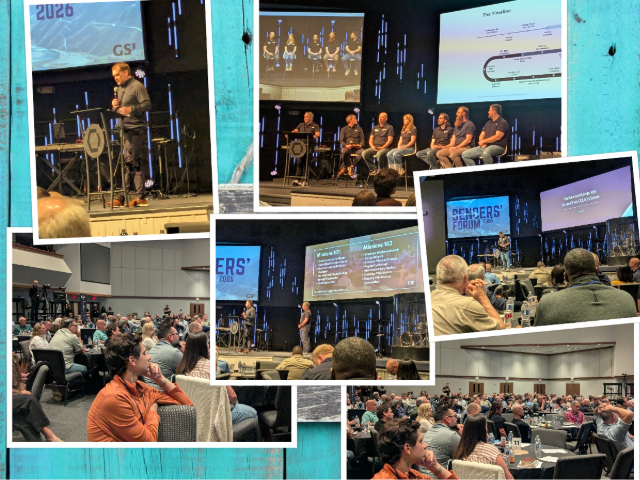
The Sender’s Forum at GlobalServe International (GSI) went very well. I had the chance to talk with GSI leaders and some church leaders about many things, including theological education. Since this was a conference for church leaders (“senders”) rather than for missionaries, I didn’t have a chance to talk directly with missionaries. Because GSI puts the local church first in all decisions, they allow each church and missionary to determine what route they will take for theological education. So, we will need to work on discussing theological education with each missionary and church.
The conference itself was great. It is encouraging to hear how GSI is involved in supporting and caring for missionaries on the field. GSI missionaries have many unique challenges since they only go to unreached people groups in countries that do not accept missionaries. So much of what GSI does is provide support and training both for the missionaries and for the sending churches. This is a great work that is being done. Please pray for GSI and for their missionaries as they spread the gospel to unreached areas.
In April, I will be teaching Church History, from the Reformation to the Present at Lightbearers here in Fayetteville. Lightbearers is a discipleship program that takes university graduates through a 1–2-year discipleship program. One aspect of their training involves providing a basic theological education for their students. I taught Church History 1 (Early Church to the Reformation) last year and I will be teaching the 2nd section this April. Pray for me as I help these students understand about the Reformation and the Modern Missions Movement.
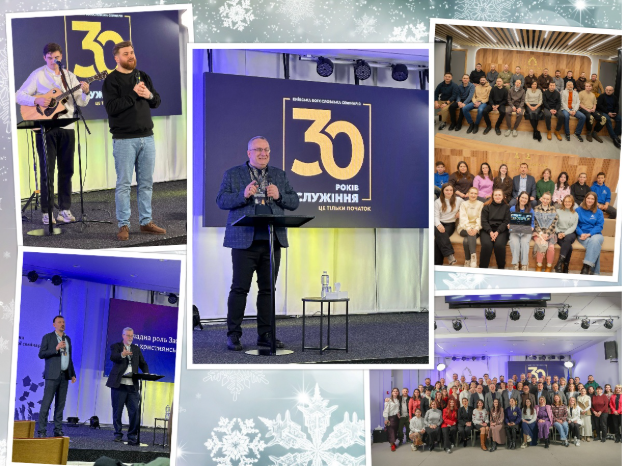
Kyiv Theological Seminary (KTS) is celebrating its 30-year anniversary this year! I have been part of the seminary for 30 years also. I first taught at the seminary in September 1996. Even with the war, I have continued to teach classes online. In the last two years, I have been co-teaching classes with Ukrainian professors helping them to be able to teach the classes. This year, I have only one class that I will still be teaching even though I will be helping with others. Pray for me as I try to find and train another professor to take over the last class.
KTS has grown tremendously since its first beginning in 1996. It has been a joy to be part of this growth. In fact, of the 24 current professors at the seminary, 16 were students of mine! The seminary now offers degrees in 15 different areas, including programs in Church Planting, Youth Ministries, Biblical Studies, Biblical Counseling, Chaplaincy, Pastoral Ministry, Christian Education, Women’s Ministries and Children’s Ministries. 10 of the Department Directors were also students of mine! Finally, even the current seminary President (pictured in the middle) was one of my first students. It is hard to express what a joy and privilege it has been to teach and train so many Ukrainian leaders over the past 30 years!
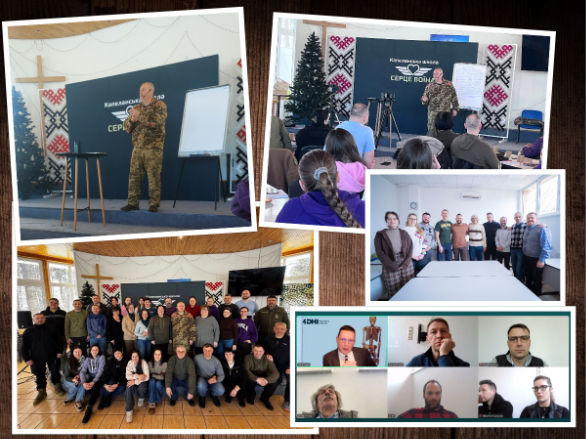
Even with the war going on, Kyiv Theological Seminary continues to minister and train students. Our dear friend, Anatoly, is serving as a chaplain for the military as well as leading seminars to train other chaplains. And another colleague, Andre, is not only teaching at the seminary but also training many in Biblical Counseling, both in the classroom as well as online.
In addition to working with theological education, I am preaching and helping with a Nursing Home ministry. This month, I will be preaching nearly every Sunday. Also, Katya and I have been hosting a small group in our home. It has been a delight working with these younger couples and teaching them the Word of God.
Family …
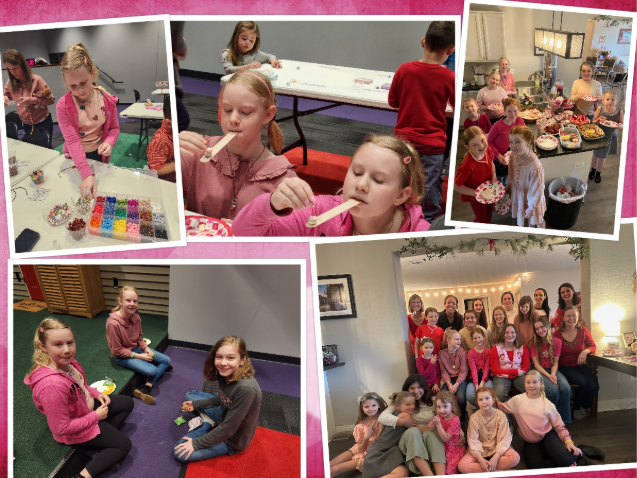
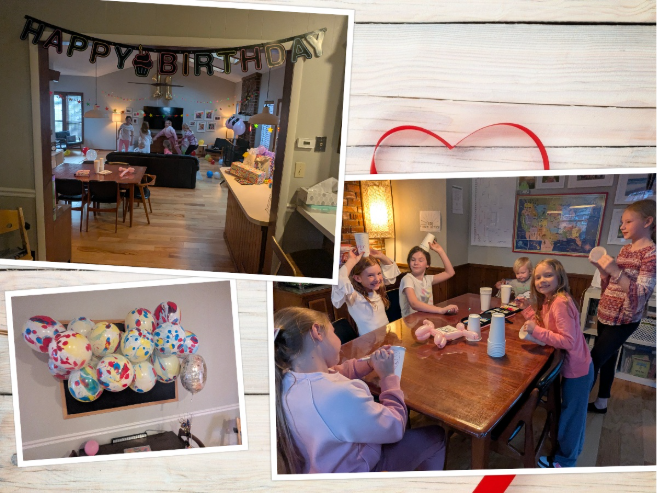
This month, the girls enjoyed going to a couple of Valentine’s Parties. One was hosted by a friend that we met shortly after moving back to Arkansas, and the other was at a Home School gathering. They also got to help Haven Cooper celebrate her 10th birthday! (We don’t have many pictures since it was for the girls only – But Katya and I got to spend a short evening together!)
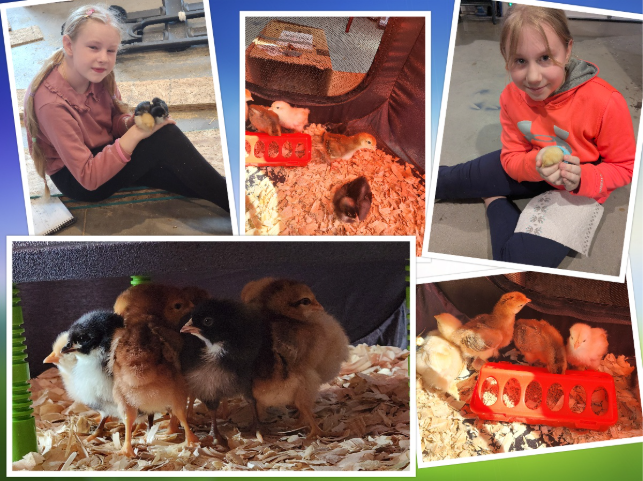
We are continuing to expand our little “homestead.” This month, we added chickens to our homestead. The girls are having a great time caring for the little chicks. I’m in the process of building a coop for them.
We have been a little over 3 years building our house, and we are getting closer to being finished. Because we had very little money, we have been building little by little as we have time and money. Our goal has been to be debt-free because we knew we could not afford a mortgage. So, we have been taking our time. We have come a long way since we first moved into the house without even a kitchen or cabinets (we cooked outside on the grill). Next week, we will finally be finishing the window casings and then I will be able to start painting the rooms. I still have to build steps to the front and back porches (right now, everyone comes in through the garage). I’m hoping to work on those in April. And we hope we can do some landscaping this spring too. I’m sure there will be other things we have forgotten, but it will be nice to see the major building tasks completed.
Health Issues …
I did all the pulmonary tests, and they did not find anything. So, I asked for a stress test, and they did find some abnormalities but nothing extremely serious. The cardiologist thinks my shortness of breath might be caused by what he called Microvascular Angina. This is treatable only by medication, so we are trying a combination of nitrates and beta-blockers to open up the arteries to increase blood flow. Hopefully, this will help. If not, then we will have to see about hiatal hernia surgery. Please pray that we can figure this out and get me back to health again.
Pray for Ukraine …
Please remember to pray for Ukraine. Right now, the war in Iran is rightfully taking center stage, but Russia’s attacks on Ukrainian civilians continues and has actually even increased now that media attention is no longer on the war in Ukraine. In spite of this, Ukrainians continue to minister and share the gospel. We keep up with many former students and friends, and the biggest thing they feel is exhaustion. Four years of war is very tiring! We often let you know about the ministries at Kyiv Theological Seminary and Ukrainian Baptist Seminary (L’viv), but we don’t always update you about the ministries of our friends working with Campus (Campus Crusade in the US). We have friends ministering to refugees, soldiers and their families, and university students. Here are some pictures from some of our friends who are working with refugees. They are not only meeting practical needs, but they are sharing the love of God along with the gospel. Like the Apostle Paul, they are sharing the gospel but also demonstrating the gospel!
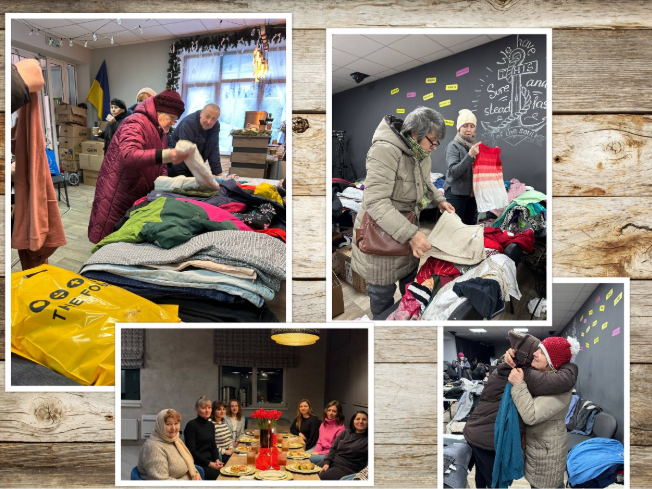
Please continue to pray for a real and lasting peace in Ukraine. And keep praying that the power of the gospel will continue to change lives in Ukraine. Thank you for all your years of supporting us so that we can be a help in training Ukrainians to minister and share the gospel!
By His Grace,
Jim and Katya, Kristina and Nadia
If you missed previous updates or just want to read some short theological reflections, you can find these at our website at https://teachingresources.org/ .
Also, some have asked about how to support us. You can send checks to Teaching Resources International, PO Box 100, Goshen, AR 72735 (note: new address) or pay through PayPal on our website. Just put “#1000 Ehrhard” in the memo so our treasurer knows where to allocate the funds.
Our personal address is 14680 Magnolia Ridge Drive, Fayetteville AR 71701.
 Teaching Resources International