Feeds:
Posts
Comments

“True Freedom …” (July 2024 Update) 

Freedom means different things to different people. To some, freedom means having no restraints and no responsibilities. But this is not true freedom. Real freedom always includes limits and responsibilities. If freedom meant no restraints, then everyone’s freedom would take away freedom from others. Still others think freedom means having no accountability. It means being able to do whatever you want without any consequences. This is also not true freedom. Freedom without accountability always results in anarchy, and anarchy always backlashes into totalitarianism – eventually taking away all previous freedoms. True freedom has consequences, responsibilities and restraints.  

In his State of the Union address in 1941, President Franklin D. Roosevelt articulated his view of what the world needed in calling for Four Freedoms that were essential for every human being – Freedom of Speech, Freedom of Worship, Freedom from Want, and Freedom from Fear. His speech was a call for Americans to recognize that such freedoms could only be possible in a democracy. It was a warning that the growing forces of Nazism and Communism would always seek to reduce and eliminate these freedoms. It was a reminder that people came to the United States seeking freedoms that they were denied in their homelands. It was a reminder that the very foundation of American life is rooted and grounded in freedom. 

But there are some freedoms that are even more important than the ones outlined by President Roosevelt. All of Roosevelt’s freedoms can be taken away from us. That’s why we fought against Japan and Nazi Germany in the 1940s. That’s why America has stood for freedom against the Soviet Union during the years of the Cold War. That’s why the United States continues to stand against socialism and anarchism and other forms of oppression even today.  

In Romans 8, the Apostle Paul reminds us that all believers have Four Spiritual Freedoms that can never be taken away from us!  

First, believers have freedom from Condemnation. This is the most important freedom because sin and judgment is our greatest problem. In Romans 8:1, Paul tells us that “there is therefore now no condemnation for those who are in Christ Jesus.” This is because all of our sins have been paid for by Jesus. If you committed a crime and someone paid that fine for you, then you cannot be convicted for that crime again. This does not mean that we are not sinners. It does not mean we are perfect. It means we are forgiven. It means that Jesus paid our debt in full – there is now no condemnation for those who are in Christ Jesus! John 5:24 also reminds us of this truth: “Truly, truly, I say to you, Whoever hears my words and believes on him who sent me has eternal life and shall not come into condemnation …. The freedom from condemnation that Jesus gives can never be taken away! 

Second, we have freedom from Emptiness.  When a person trusts Christ, the Holy Spirit comes to take up residence in his life. (Romans 8:9 reminds us that all believers have the Holy Spirit residing in them: “Now if anyone does not have the Spirit of Christ, this person does not belong to him”). Because of this, the Spirit within us makes us righteous before the Lord (Romans 8:10) and gives us the promise of future resurrection (Romans 8:11). Why? Simply because His Spirit now lives in you. But that’s not all, His Spirit in us gives us the power to defeat sin in our lives (Romans 8:12-13), makes us God’s children (Romans 8:14, 16), and sets us free from the spirit of fear (Romans 8:15). We may feel empty at times, but as believers, we will always have His Spirit dwelling within us crying out “Abba, Father.” We need never feel empty or abandoned again! That’s real freedom! 

Third, believers have freedom from Discouragement– even from suffering. Every believer faces suffering – some more than others. But when we suffer, we know that “all things work together for good to those that are called according to His purpose.” In Romans 8:17-30, Paul reminds us that suffering is universal (“all creation groans”) – everyone suffers and even all of creation suffers with us. But we do not need to be discouraged. God has given us His Spirit and the Spirit groans with us in our suffering. But that is not all, even in our suffering, God has a purpose (Romans 8:29) – to conform us to the image of His son. And His Spirit comes alongside us and prays for us in words that are deeper than even our hearts understand. We may experience difficulties, hardships and even suffering and persecution, but God is working in all and through all for our good. That’s encouraging news – that’s freedom that can never be taken from us as long as we remember God’s presence with us and purpose for us in times of suffering. 

Finally, we have freedom from Separation. Paul wraps up his reminders about the freedoms we have in Christ by reminding us that “nothing can ever separate us from the love of God in Christ Jesus our Lord.” In verse 38-39, Paul gives a comprehensive list of things in life that might try to separate us from the Lord – “neither death, nor life, nor angels, nor heavenly rulers, nor things that are present, nor things to come, nor powers, nor height, nor depth, nor anything else in creation.” In the verses before this, he even reminds us that even if we are “led like sheep all day long to the slaughter,” we are “more than conquerors through Him who loved us.” Many situations, crises and people might try to separate us from the Lord, but in Christ, we have freedom from separation! 

Every 4th of July, Americans gather to celebrate freedom. But as we celebrate our freedom in America, we need to never forget that our freedom came with great cost and sacrifice. All the signers of the Declaration of Independence put their lives on the line for our freedom – many lost homes and family and even their lives. Throughout our history, American soldiers have been willing to sacrifice so that the freedoms they love could be experienced by others in the world too. 

As believers, we need to remember that our spiritual freedoms also did not come without sacrifice. Whenever we think about freedom, we should remember that Jesus came for one reason – to give his life as a ransom for many. He paid the ultimate sacrifice – not just death on a cross but taking our sins upon himself! He did so that we might be free forever. So, on July 4th, we praise God for the freedoms we have in America, but we need to realize that those can be taken away from us by one election cycle or culture change. But what we have in Christ can never be taken away from us. And that is true freedom! 

Teaching and Ministry …  

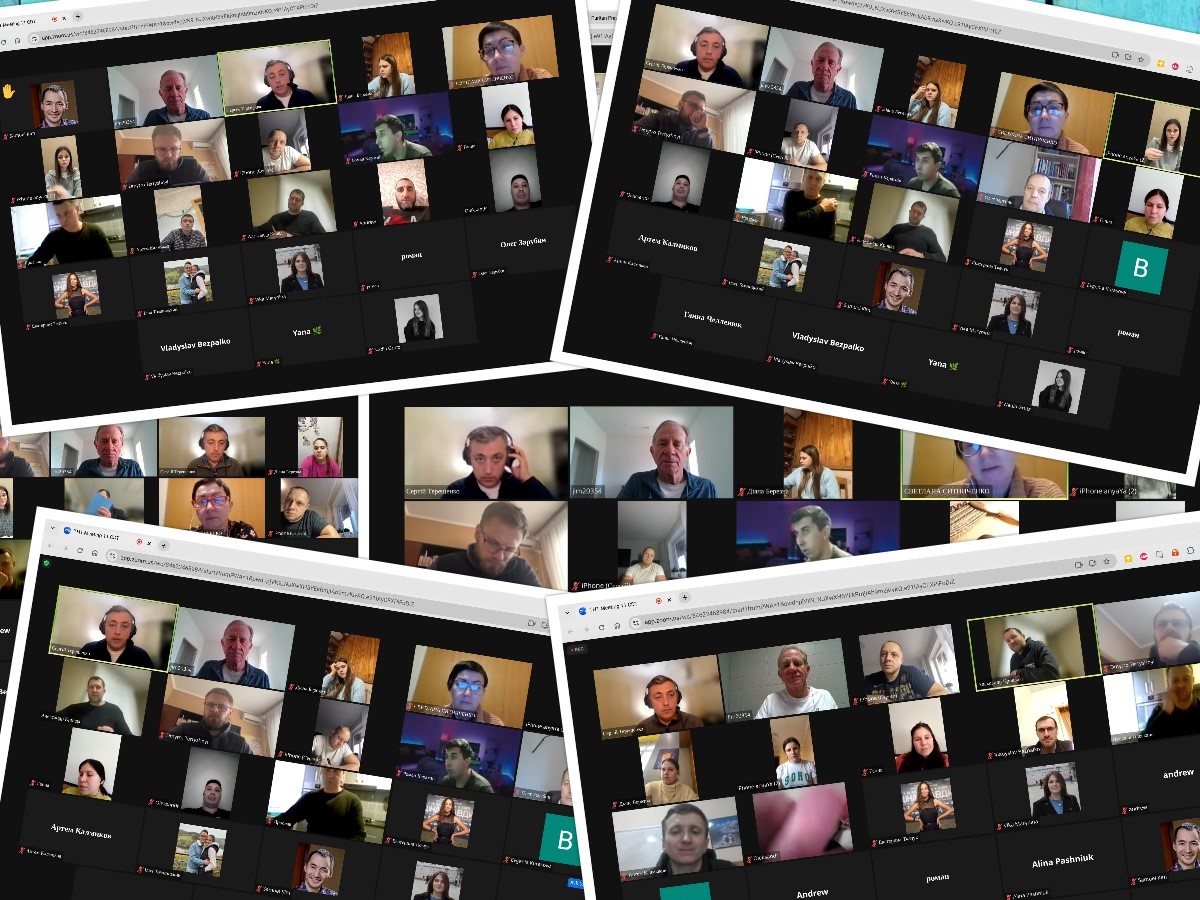
Last month, we completed our class on Research and Writing at Kyiv Theological Seminary. We are currently finishing up grading all the papers. The feedback from students was very positive. Many said that this class was one of the hardest they have taken but also one of the most helpful. I appreciated that many of the final papers dealt with topics related to ministry during a time of war. It shows that the students are actively applying what they are learning to their situations.  

This week, I will be in Sarasota, Florida for the GlobalServe International (GSI) new missionary orientation. We are sending out about 25 new families! All of these will be heading to countries that are officially closed to missionaries. I am looking forward to meeting these new missionaries and getting to know them. I will be helping GSI with missionary care and training, so this is an important conference for me. Be praying for me as I try to see how the Lord can use us in training and caring for missionaries who are working in very difficult environments. 

Even though my time is short, I decided to audit a Greek exegesis class from Southern Seminary in July. It is an online class covering the book of Jude. I’m enjoying getting back into using my Greek and looking forward to studying the book of Jude. I won’t have time for all the assignments, but I think it will still be a joy to work through the Book of Jude. 

Time with Family … 

May, June and July could be characterized as hospitality months! In early May, we began hosting a few families that were passing through the area and needed a place to stay. Then in mid-May, Katya’s mom came to be with us for 3 weeks. She left on a Thursday, and Joel and Ally and their family arrived to spend 3 weeks with us (they just left Tuesday). The week of 4th of July, Joy and Aimee came to join us and stayed with us until July 5th.  Sean, Meredith and their kids came and joined us nearly every day during the 3 weeks that Joel was with us. At times, we were hosting as many as 16 people! But it was a great joy for all of us to be together. And we built this house so that we could be more involved in hospitality.  

In June, we joined friends from Cornerstone Bible Fellowship in NLR on a float trip on the Buffalo River. Because it was so far from us in Fayetteville, we decided to camp at the landing for 3 days. The river was great for floating and for swimming. And we loved being able to camp and cookout. We especially loved being able to take Katya’s mom with us – she loves kayaking and camping! 

In June, Sean and I worked on getting the front and back decks on the house. We completed the back deck just before Joel and Ally arrived. We finished the front deck while they were here.  Most days, we worked from daylight until after dark. Needless to say, we were exhausted, but we still had time to spend with family on the Fourth and many other days. 

We also got to enjoy multiple fireworks displays. First, on Sunday night, we went to a little church down the road from us to enjoy a relaxed fireworks display. Then we decided to stay home and have our own fireworks at the house. We got an extra surprise by being able to see some distant fireworks from our house too (we are on a mountain above Fayetteville and Springdale). 

Pray for Ukraine …  

Please keep Ukraine in your prayers. The news does not give many updates, but things continue to be very difficult. Even during our class meetings, students had to deal with electric blackouts that hindered their internet connections. Russia continues to destroy Ukraine’s energy and heating centers. This coming winter could be very difficult for Ukraine if Russia continues to target these energy sectors.  

Also, pray for our students. Some are serving in the military, and all are helping to minister through humanitarian efforts. The war has opened many avenues for sharing the gospel and the love of Christ. Please pray that their efforts will produce fruit for eternal life! 

Thank you for praying for us and for your support! As someone who grew up during the Cold War, I am constantly thankful that Ukraine is no longer under Soviet control and, even though there is an on-going war fight now, Ukraine is free from Russian domination. And I rejoice that many, many freedoms have returned to Ukraine – especially spiritual freedom! 

By His Grace, 

Jim and Katya, Kristina and Nadia 

If you missed previous updates or just want to read some short theological reflections, you can find these at our website at https://teachingresources.org/ .  

Also, some have asked about how to support us. You can send checks to Teaching Resources International, PO Box 100, Goshen, AR 72735 (note: new address) or pay through PayPal on our website. Just put “#1000 Ehrhard” in the memo so our treasurer knows where to allocate the funds.  

Some have also asked about our personal address now that we are in the states. Our new address is 14680 Magnolia Ridge, Fayetteville, AR 72701. 

Public and Private Worship … (June 2024 Update) 

Every time I teach the Prayer and Worship class, students have one big question (among others). I have a lecture called “Public Worship is More Important than Private Worship,” and most of the students disagree. On the surface, it seems like private worship should be what “feeds” our public worship. But upon further examination, I am convinced that, while private worship is vital to our walk with God, public worship has far more benefits and blessings than private worship. We posted this article a number of years ago. But I think it is worth revisiting this important topic – especially as more and more believers are tempted to neglect public worship by listening online. There are many ways that private worship, as important as it is, is not sufficient for our total spiritual growth. 

Continue Reading »

The Mother of our Lord … (May 2024 Update) 

Motherhood is simultaneously the greatest and the hardest thing. The job is difficult, unending, and heart-wrenching. Mothers are to be celebrated because of the tremendous influence that they have upon our lives and because of the unselfish love and care they provide. 

I have always been surprised at how much affection and attention is given to mothers by everyone – especially professional athletes. I love watching football games. And it has never ceased to amaze me at how these great big football players often react in interviews after games. Now, I assume that most of these athletes owe a lot to their fathers for all the time they put into helping to train them so they can be professional athletes. And how much time their dads spent throwing and catching footballs with their sons. But whenever one of these athletes gets on camera for an interview, what do they always have to add at the end? “Hi mom. I love you.” I’ve never heard one say, “Hi dad. I love you.” I’m sure they love their fathers too. But moms hold a special place in their hearts. That’s why Mother’s Day is such a special day – because almost everyone wants to let their mother know how much they appreciate them for all they do. 

Interestingly, the Bible says very little about what it takes to be a good mom. Do a search sometime to see what the Bible specifically says about being a good mother. I found numerous sites with titles like “50 Verses about Motherhood.” All the verses listed were general verses about godly wives, parents teaching their children, or God loving us as a mother loves her children. But nothing specifically about motherhood.  

However, the Bible does show us some examples of a great mom. And one of those examples is Mary, the mother of our Lord. Mary is often idealized and even idolized within branches of the Christian church. This is understandable too because she was the mother of Jesus. In fact, Mary herself says, “all generations shall call me blessed!” This is not because she was unusual as a mother. It was because she was a woman who feared the Lord. But what are some characteristics of Mary that made her so extraordinary? 

So what made Mary so special? And what are the characteristics of Mary that make her a wonderful example for all women and all mothers? 

Continue Reading »

“Resurrection… Hope!” (April 2024 Update) 

Nothing is worse than a feeling of hopelessness! When the doctor comes out of the operating room and says, “I’m sorry. There’s nothing more we can do.” It is a feeling of hopelessness. Sometimes, we have tried everything and nothing works – in fact, things even got worse. And this feeling of hopelessness can overwhelm us. That’s how the disciples felt on the sabbath after Jesus was crucified. They had put all their hopes on Jesus. Not just their hopes – the hope of Israel and the hope of all mankind rested in the person of Jesus. But now, all those hopes were gone. Their long-awaited Messiah was dead. Their teacher and their friend was in the tomb. All hope was lost!  

That’s how all the disciples and the followers of Jesus felt after the crucifixion. We see this most clearly in Luke 24:21 where the two disciples on the Emmaus Road meet Jesus. There they express their shattered hopes to him: “But we were hoping that it was He who was going to redeem Israel. Indeed, besides all this, today is the third day since these things happened.” But the resurrection changed their hopelessness into hope again! 

Continue Reading »

“The Joy of the Cross…” (March 2024 Update) 

What makes you really happy? All of us have a variety of things that bring us real joy. But for most of us, it is the feeling that we have accomplished something that we really care about. Hebrews 12:1 tells us that we are to look to Jesus “who for the joy that was set before him endured the cross, despising the shame and has sat down at the right hand of the throne of God.” Crucifixion was one of the most painful and shameful deaths devised by man. It was sort of a long, terrible torture that ended in a terrible death. Yet when Jesus went to the cross, he endured all its pain and shame because of the “joy that was set before him.”  

This is not to minimize the pain and suffering of the cross. Crucifixion probably originated with the Persians. Alexander the Great copied this form of execution and the Romans learned this method from him. The Romans perfected crucifixion as a punishment designed to maximize pain and suffering. It wasn’t about killing somebody — it was about killing somebody with the greatest amount of suffering and pain. Crucifixion was also considered one of the most disgraceful forms of execution, reserved only for slaves, foreigners, revolutionaries, and extremely vile criminals. The only time a Roman citizen could be crucified was for desertion from the army.  

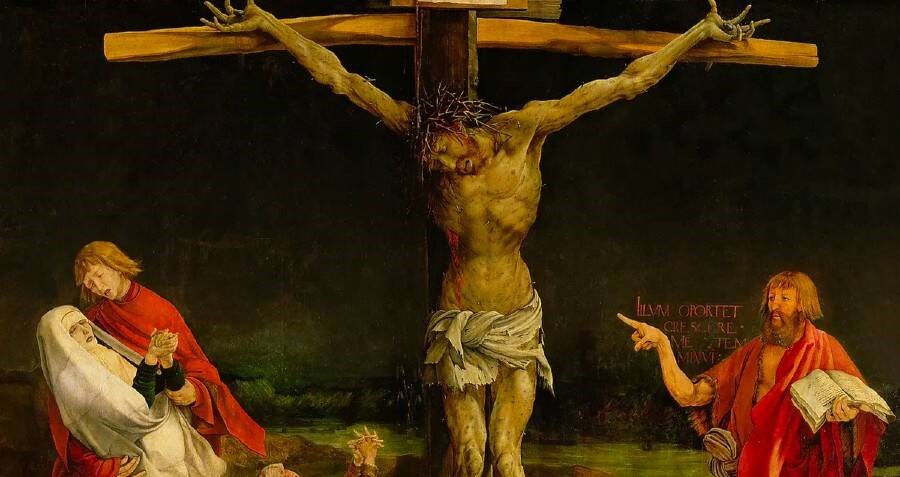
When the Romans crucified someone, they made it as painful as possible. Even before a person was crucified, they subjected him to flogging or scourging to beat and weaken the victim. Then the person carried his own cross (often the crossbar) through the streets to the place of execution. The victim was then either tied to the cross (the most common method) or nailed to it. Most of those crucified suffocated to death because the person’s weight on their stretched arms would eventually suffocate them. Most of the time, victims used their legs to hold themselves up so they could breathe some. Many crosses even included a pedestal for their feet so that they would be able to live longer and suffer longer. Most died in 3-4 days. When they needed to hurry up the death, the legs were broken so the person would suffocate more quickly. It was truly a terrible way to die. 

One of the most amazing things about the cross is that Jesus could have avoided it – but he did not. In John 10:17-18, Jesus says, “The reason my Father loves me is that I lay down my life—only to take it up again. No one takes it from me, but I lay it down of my own accord. I have authority to lay it down and authority to take it up again. This command I received from my Father.” In Matthew 26:53, Jesus even reminded his disciples “Or do you think that I cannot call on my Father, and that he would send me more than twelve legions of angels right now?” All of this tells us 3 amazing things about the cross of Jesus. 

First, the cross and all its sufferings were totally voluntary. Jesus endured the cross and its sufferings. He did not have to – he chose to. He allowed himself to be captured, tortured, beaten and nailed to the cross. At any point, he could have called 12 legions of angels to rescue him. But he did not. He endured the cross because he wanted to. No one forced him to do so. In Matthew, Mark and John, Jesus reminded his disciples that, “the Son of Man did not come to be served, but to serve, and to give his life as a ransom for many.” He came with a purpose – to die as a ransom for many. His death was not accidental, it was not an unfortunate series of events, it was completely voluntary. He didn’t have to die for us – he chose to! 

Second, the cross and all of its sufferings were completely foreseen. Jesus knew everything that would happen to him before it ever happened. He knew Peter would deny him and he even knew when he would do it and how many times. He knew that he would be handed over by the chief priests and the scribes and be put to death by the Romans. He even told his disciples that they would all desert him when this happened. He knew that Mary was anointing him for his death. And he knew that Judas would betray him. Nothing that happened in the crucifixion came as a surprise to him. He knew it all before it ever happened. He knew about the thorns and the scourging and the nails in his hands and feet. And yet – he willingly went to the cross even though he knew about everything he would have to suffer: “I lay down my life—only to take it up again. No one takes it from me, but I lay it down of my own accord. I have authority to lay it down and authority to take it up again.” His suffering and death was totally voluntary and it was completely foreseen. That makes the cross amazing. 

But that’s not all. Third, the cross and all of its sufferings were absolutely necessary. After the resurrection (notice Jesus said, “I lay down my life—only to take it up again”), he asked the disciples, “Wasn’t it necessary for the Messiah to experience all these sufferings and afterward to enter into his glory?” Jesus’ suffering and death was voluntary, and completely foreseen, but it was also absolutely necessary. We see this most clearly in the Garden of Gethsemane. Three times Jesus prayed, “O My Father, if it is possible, let this cup pass from Me; nevertheless, not as I will, but as You will.” In verse 42, he is more specific: “if this cup cannot pass away from Me unless I drink it, Your will be done.”  

What was the “cup” that Jesus was wanting to avoid drinking? Most likely, it refers to the cup of God’s wrath against sin. We see this often in the Old Testament when God tells nations that they will drink the cup of His wrath for their wickedness and their sins. As Jesus faced the cross, he knew about the sufferings and the pain, but he also knew that the cross meant something far worse for him than physical sufferings. Jesus understood that the sins of the world, our sins, would be placed upon him on the cross. And that the one “who knew no sin would become sin for us!” (2 Corinthians 5:21). He would drink the cup of God’s wrath so that we would not have to. 

But notice carefully what he says – “if this cup cannot pass away from Me unless I drink it, Your will be done.” If there is any other way for people to be saved, let this cup of Your wrath pass away from me.” If there is any other way …. But there was not any other way for God’s wrath against us to be satisfied. Jesus had to drink the cup – for us – so that we might be set free from the wrath of God that was rightly ours. The cross was totally voluntary, it was completely foreseen, and it was absolutely necessary.  

So why did Jesus endure the cross and its suffering? Hebrews 12:2 tells us that he did it “for the joy that was set before him.” What was that joy? It was the joy of seeing many sons and daughters being brought out of sin into relationship with the Father that he endured those sufferings (Hebrews 2:10). The joy of the cross was the salvation of everyone who would believe on Him.  

One of my favorite songs tells it all when I think about the cross: 

He paid a debt he did not owe 

I owed a debt I could not pay 

I needed someone to wash my sins away; 

And now I sing a brand new song, “Amazing Grace” 

Christ Jesus paid the debt that I could never pay. 

That’s why we speak about “Good Friday.” Because, “for the joy that was set before him,” he “endured the cross, despising the shame and has sat down at the right hand of the throne of God.” That’s why we can call the day he died on that terrible cross “Good Friday.” That’s why we can speak about the joy of the cross.  

Teaching Ministry … 

Last month, I taught Theology 1 online at Kyiv Theological Seminary. We had a great class with lots of good and practical questions. In their first essay, they had to write about what they thought was the most important theological issue facing Ukraine today. Most of the papers were about how to answer questions about the goodness of God in the time of war when friends and family members were dying in the war. While we were able to look at some biblical answers, it was clear that this was no simple theological issue for them. The second most frequent theme in papers was the question of whether a Christian could serve in the army and defend his country. Traditionally, Baptists in Ukraine have been pacifists and believers could not serve in the army. One student even wrote about being excommunicated from his church for joining the army. But he felt that biblically and practically he was doing the right thing even if his church disapproved. The class was really good but, as you can see, the questions they had were really very personal and practical. Please pray for these students as they live out their faith in very difficult times! 

Continue Reading »